Canada: a complex truth

A search to who are the Canadians?

Driving on the Canadian roads through the vast wilderness gives opportunity to contemplate. Feeling overwhelmed by its impressive nature, high snow-capped mountains, endless forests and a thousand lakes, one might wonder: who built this country, what kind of people are living in it? But above all; what are the problems citizens are dealing with?

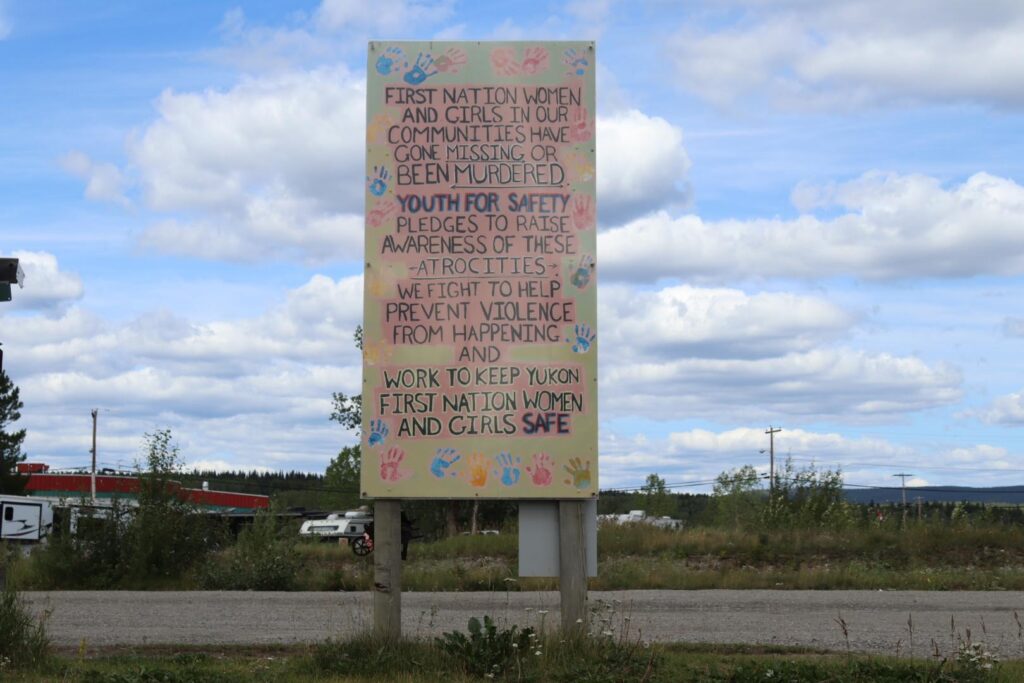
Questions which are easily asked, but hard to answer, we found out. Driving on Highway 16, also called the ‘Highway of Tears’ grabbed our attention. On this highway a significant number of women have disappeared from the 1970’s onwards. They disappeared mainly when hitchhiking, most of them being Indigenous Canadians. Some of the bodies have been found, often nude or partly nude lying next to the road or in the near forest. But unfortunately even fewer murder cases have been solved and the majority of women are still missing, their case is “case closed”. An unknown and brutal ending to their lives. We wondered, why did so many people go missing on the ‘Highway of Tears’? Why were most of them indigenous citizens? Why only women? A lot of why’s and when diving into this topic, things became complex.

The ‘Highway of Tears’ grabbed our attention.

The many faces of Canadians

To be able to answer these questions we need to go back in time and dive into some history. A historic series of events that led to a deeply rooted problem that is still present in today’s people’s lives. Canada has always been a country of immigrants. Welcoming people from all over the world and providing opportunities to build a life here containing a safe, western culture guarded by democracy and the rule of law. However, before most immigrants arrived, the country was inhabited by different nationalities, trying to live all together on this immense piece of land. These Indigenous people were, and still are, the Indians (called the First Nations), the Inuit and the Metis. Things turned complex when Europeans, especially the British and the French, colonized Canada in the 1600s and 1700s and oppressed the Indigenous people. The western people and culture was seen as superior which led to a number of cultural conflicts. 


The white people believed that the western culture should dominate, so in order to speed up the transition to the western culture, the Canadian government and the Christian Church introduced in 1870 “Indian Residential Schools”. Boarding schools for Indigenous children with the purpose to separate and isolate them from their family and community in order to beat the Indian out of them and transform them to a white western person. Children spent years (some almost their entire childhood) in these schools. Estimates tell us that around 150.000 Indigenous children were forcefully put in these schools, the last boarding school closed in 1996. Imagine, this practice continuing for more than 120 years. Other estimates indicate that around 7000 children died in these boarding schools, mainly because of diseases. Records were not kept accurate and not much was documented, which makes it hard to trace down the numbers and identity of children. As the children vanished from their family into the boarding school, they vanished again from the earth due to a lack of documentation on them. 


But it didn’t end here. While in the 1950’s, the Indian Residential Schools started closing (a process that took till 1996), it was not a real closing or an end of these practices. It was merely a shift towards the ‘Sixties Scoop’. Another practice began: from mid 1950 till the end of 1980, about 20.000 Indigenous children were at a very young age taken away from their family and placed in foster homes. Often without consulting or even letting know the biological parents. They were just ripped off from their homes by the police. To most of the children the foster homes silenced about their cultural background, sometimes telling them lies. For example, they told their foster child it was Italian, that’s why it had dark hair and brown eyes.  

In 2008, formal apologies were made by the government for these dark times in Canadian history.

Graves instead of playgrounds

That this piece of history is not ancient and still lives on today is shown again in 2015 when a shock hit the country. Unmarked graves and potential burial sites containing bodies and remains of children have been found near school sites and churches. They have been found before throughout the country, but not in the size as was found in 2015. 

How can a country so beautiful have people in it fighting each other?

Bodies and the remains of about 200 unaccounted individuals, being children, were found in a grave next to a school. Since then, using ground-penetrating radars, more of these sites have been identified. The most recent one in May 2023. People started wondering, how many schools will ‘pop up’ having a graveyard full of children instead of a playground? 

Up to date 1900 bodies were found, meaning there can still be lots of them somewhere. These facts make you think, how can a country so beautiful have people in it fighting each other?

A troubled human rights case

Back to the ‘Highway of Tears’ murders and missing cases, an example that illustrates the disproportionate violence against Indigenous women. These social disorders we face today are symptoms of a deeper rooted problem: a problem that started in 1700, at the time of the colonization in Canada. The oppression of the Indigenous people and imposing a culture on them that is not theirs, harming the children and families with the Indian Residential Schools and the Sixties Scoop led to a trauma that is still vivid. It did not only affect the Indigenous people individually, but as a community: losing control over family and culture. The trauma passed down generationally. Survivors of residential schools or foster homes have difficulty in forming trusting relationships with people and often develop an inability to respond to stress without resorting to destructive behaviour or addictions. 

Statistics show that crime rates are about six times higher involving Indigenous people than white Canadians. Within the Indigenous communities there is a lot of poverty, inequality, abuse, suicide, alcohol and drugs addiction and a low level of education.


It seems we are dealing with a troubled human rights case, one that happened in the past but also one that is still continuing today by the battle the Indigenous people fight. Although lots of governmental and private projects are initiated to support the Indigenous community and strive for improvements, progress is at a slow pace. Human rights organisations and NGOs such as Amnesty International, Human Rights Watch and the United Nations monitor the case closely and report yearly. Let us be clear, Canada is not alone in this topic. More countries, such as Denmark (Greenland), Australia, the USA and New Zealand are facing similar problems and problematic dark pages of history when it comes to Indigenous people and a country’s past.


Solutions to improve the quality of life for Indigenous people are theoretically there, but changing people’s behaviour is something that is not easily done. Especially when the wounds of the past are still present. How to make the theoretical solutions work in real life is yet a subject of debate and a big question mark. Or will time heal and tell?

Scroll to Top